
The milestone
RaptorCode is the flagship product from RaptorLabs: a local-first, supervised coding terminal that runs autonomous workflows without ever taking the keys away from you. It is not a chat box that pastes snippets, and it is not an unsupervised agent that commits behind your back. It is an orchestrator — one that turns a one-line mission into parallel, contained, fully reviewable work.
RaptorCode ships today for Linux, macOS, and Windows as single-binary builds. This is the story of a single run.
The mission: raptor swarm run "add stripe checkout"
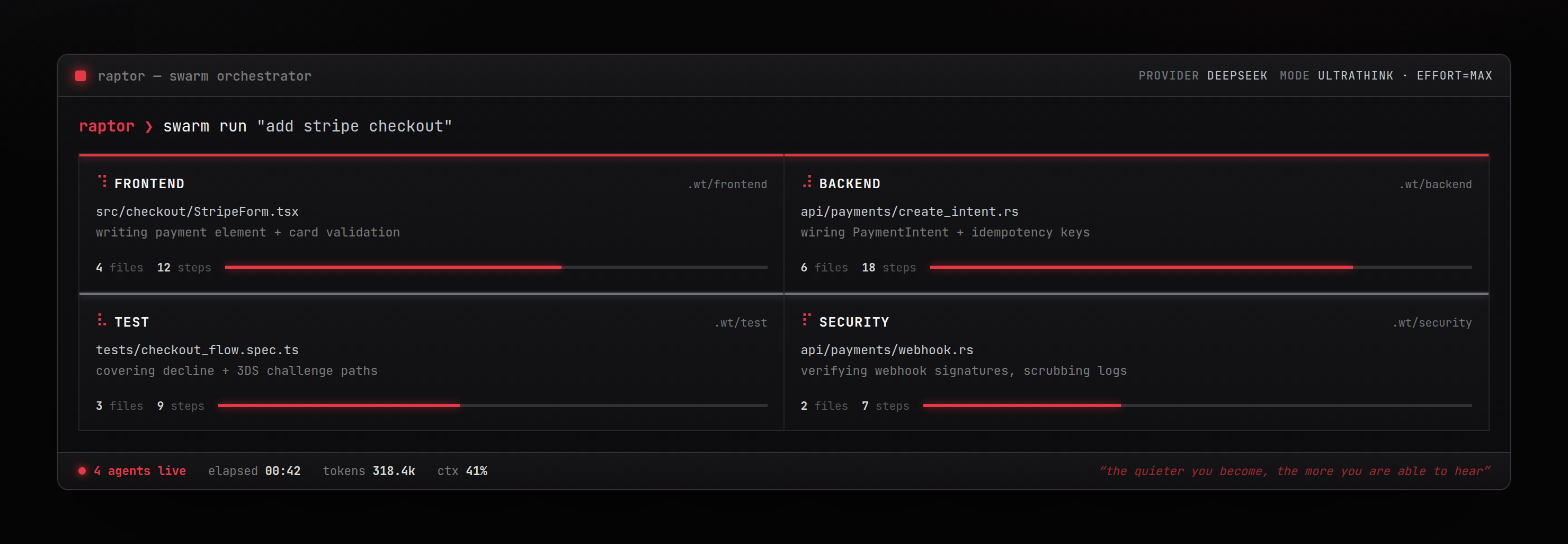
You hand RaptorCode a mission in one line. Its reasoning model drafts a
role plan (RAPTOR_PLAN.md), then forks four isolated git
worktrees under .wt/ — one each for the frontend,
backend, test, and security specialists. From that moment they work in
parallel, at full depth, never stepping on each other’s files.
Inside a worktree: the agent loop
Each specialist runs a real tool-executing loop — read, think, write, run, repeat — inside its own sandbox. Sessions start with ultrathink on and reasoning effort at max, so the backend agent reasons about idempotency, partial failures, and retries before it writes a line. Live context-budget telemetry tracks the run against a 1M-token window, with rolling compaction that keeps the system prompt and recent context intact on long sessions.
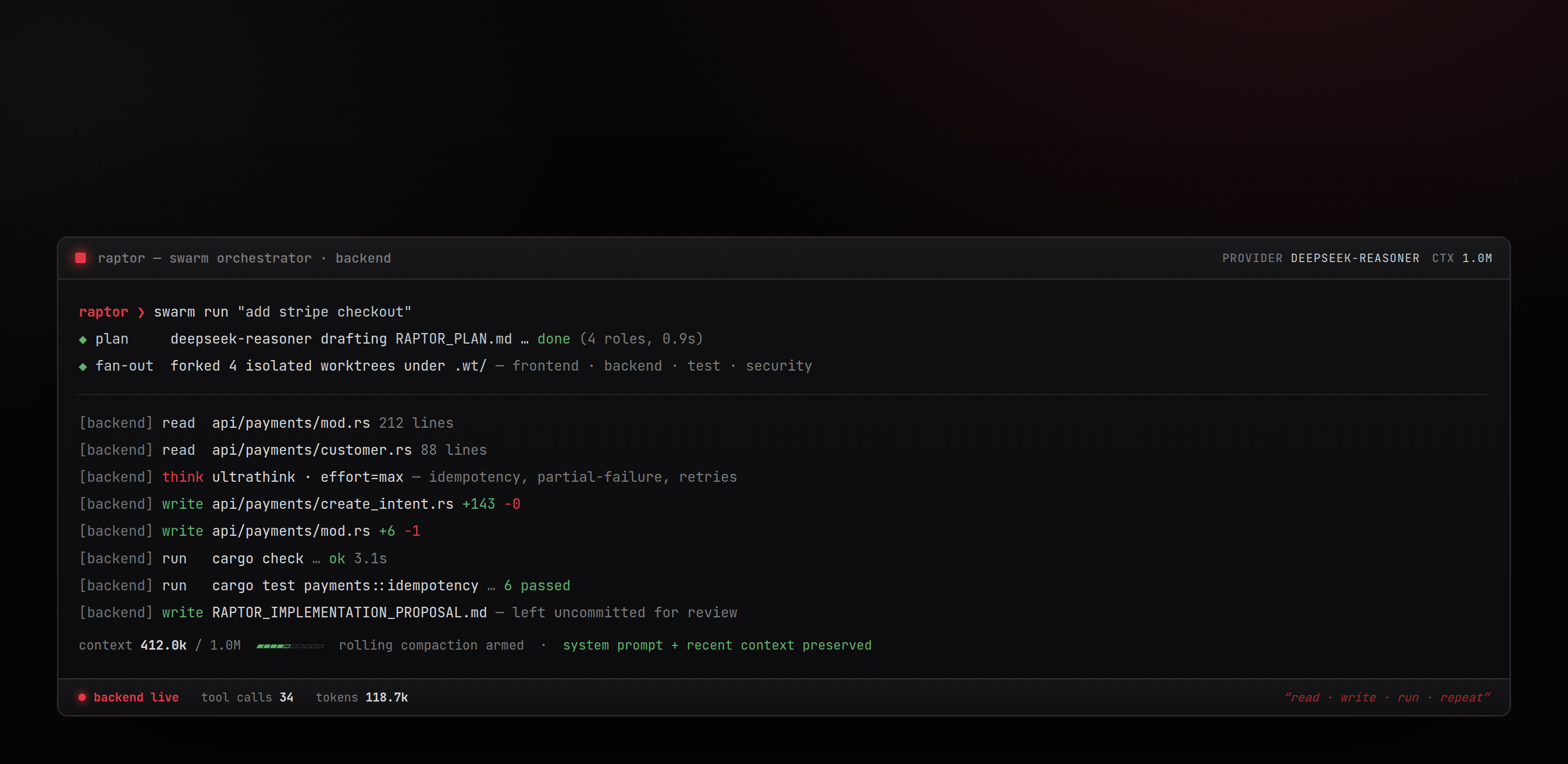
create_intent.rs, and running cargo checks
— with a live context-budget meter.
The handoff: review, then merge
Nothing is committed. Every change lands uncommitted
inside its worktree, alongside a written
RAPTOR_IMPLEMENTATION_PROPOSAL.md. You run
raptor review to see the full picture across all four
worktrees, inspect the unified diff, and — only when you’re
satisfied — run a supervised merge. The preflight checks for
conflicts and green tests before anything touches your branch. You stay
in command, start to finish.
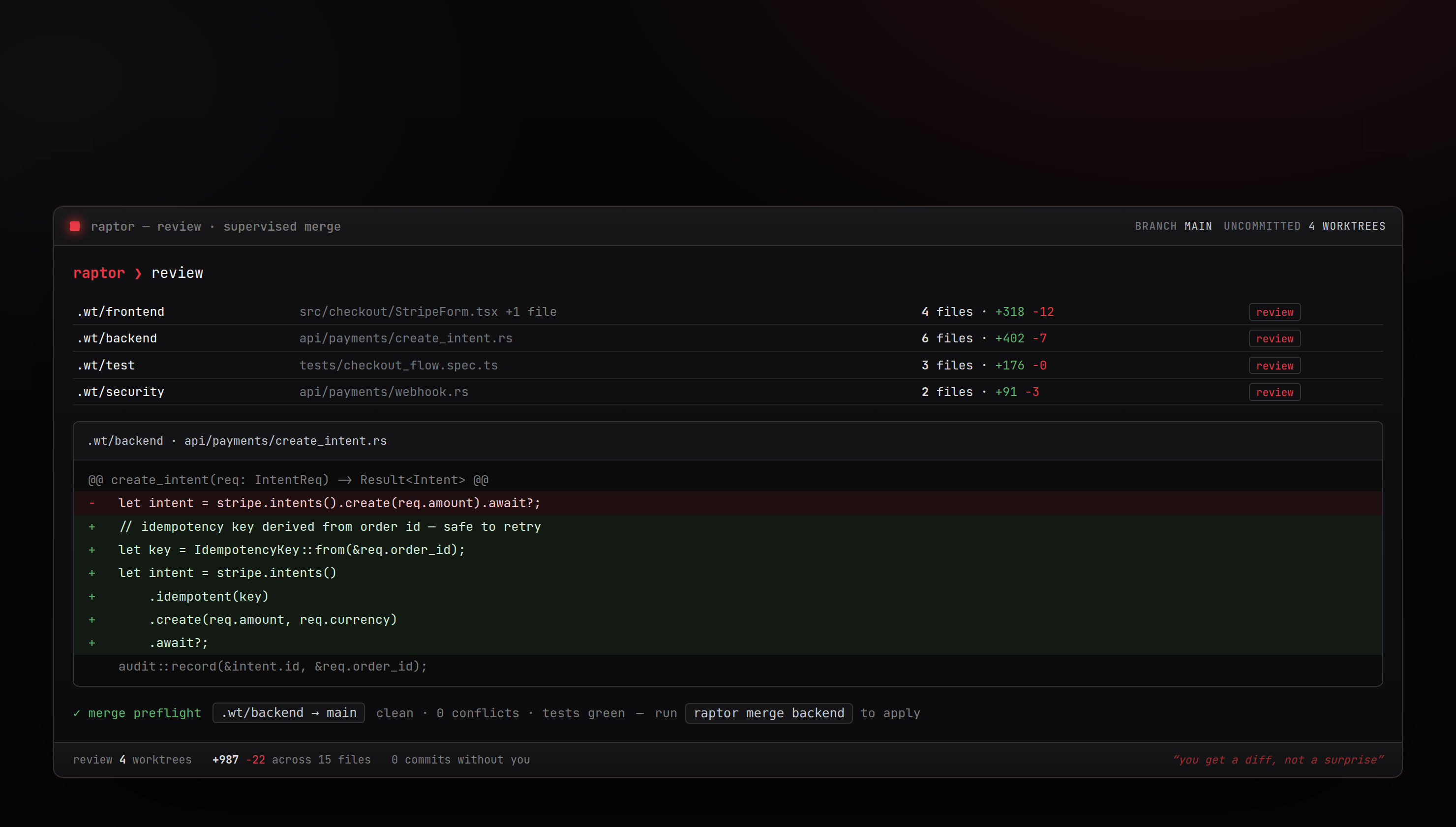
raptor review — changes summarized across every
worktree, the unified diff in full, and a supervised merge preflight.
You get a diff, not a surprise.
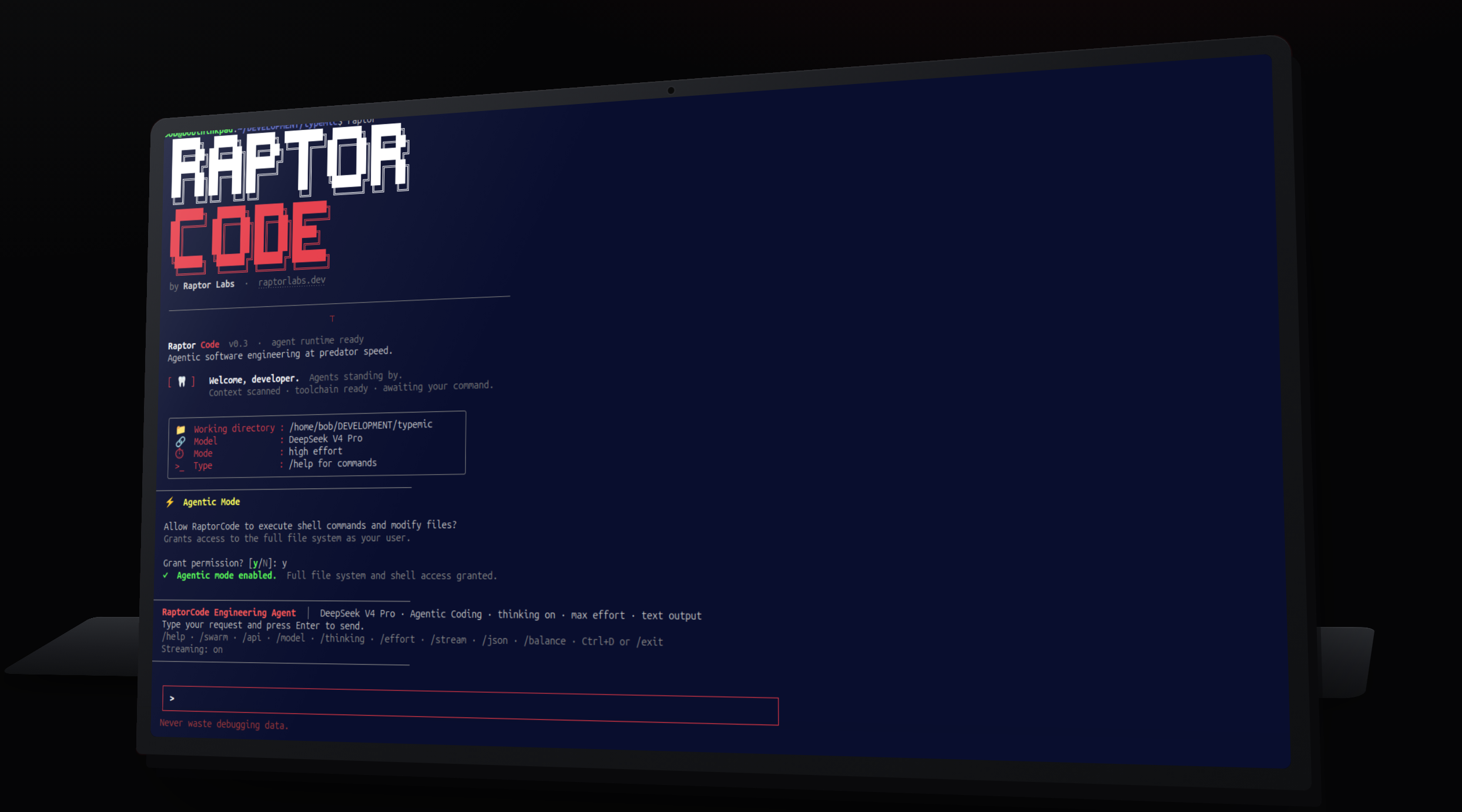
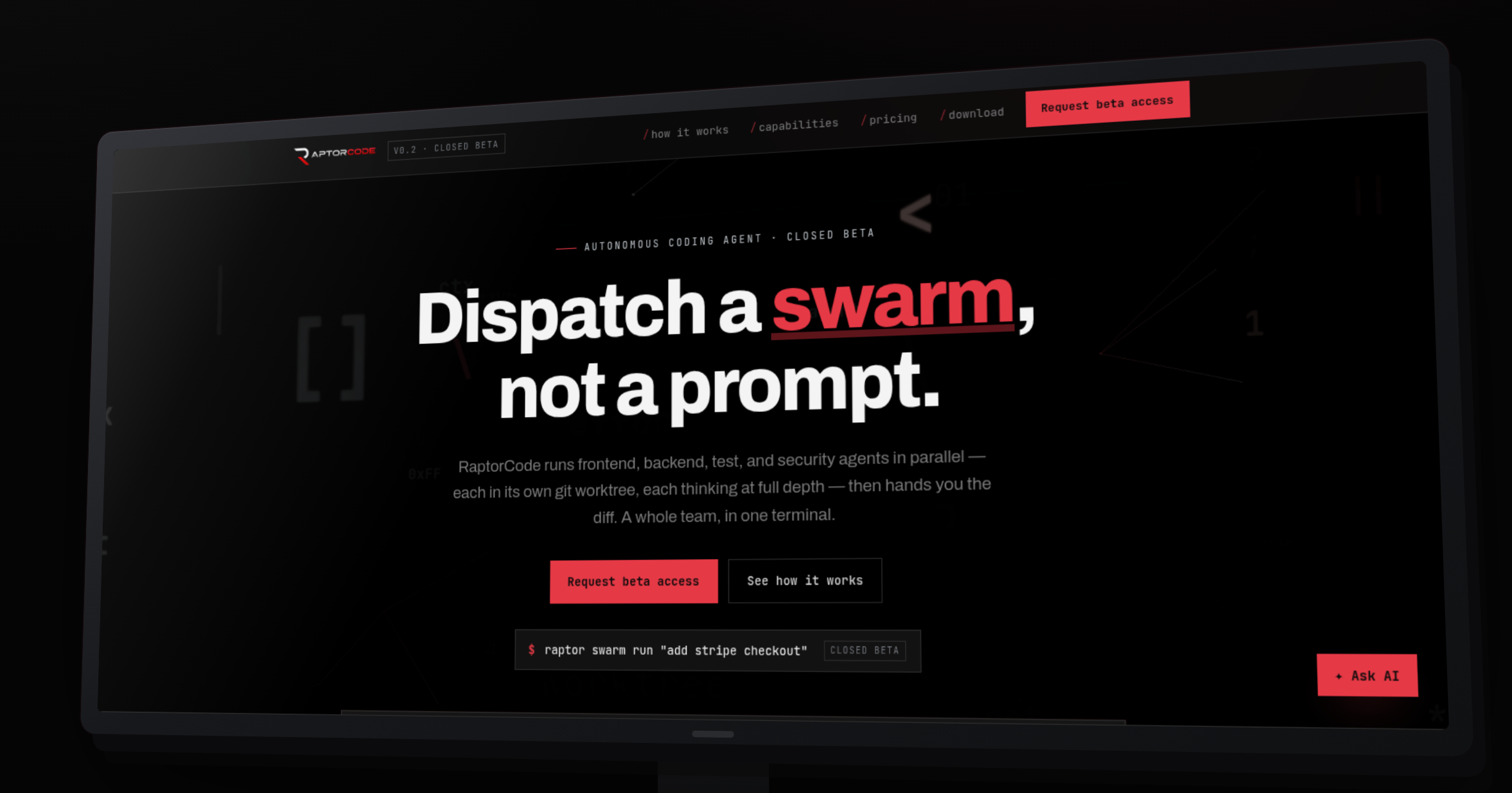
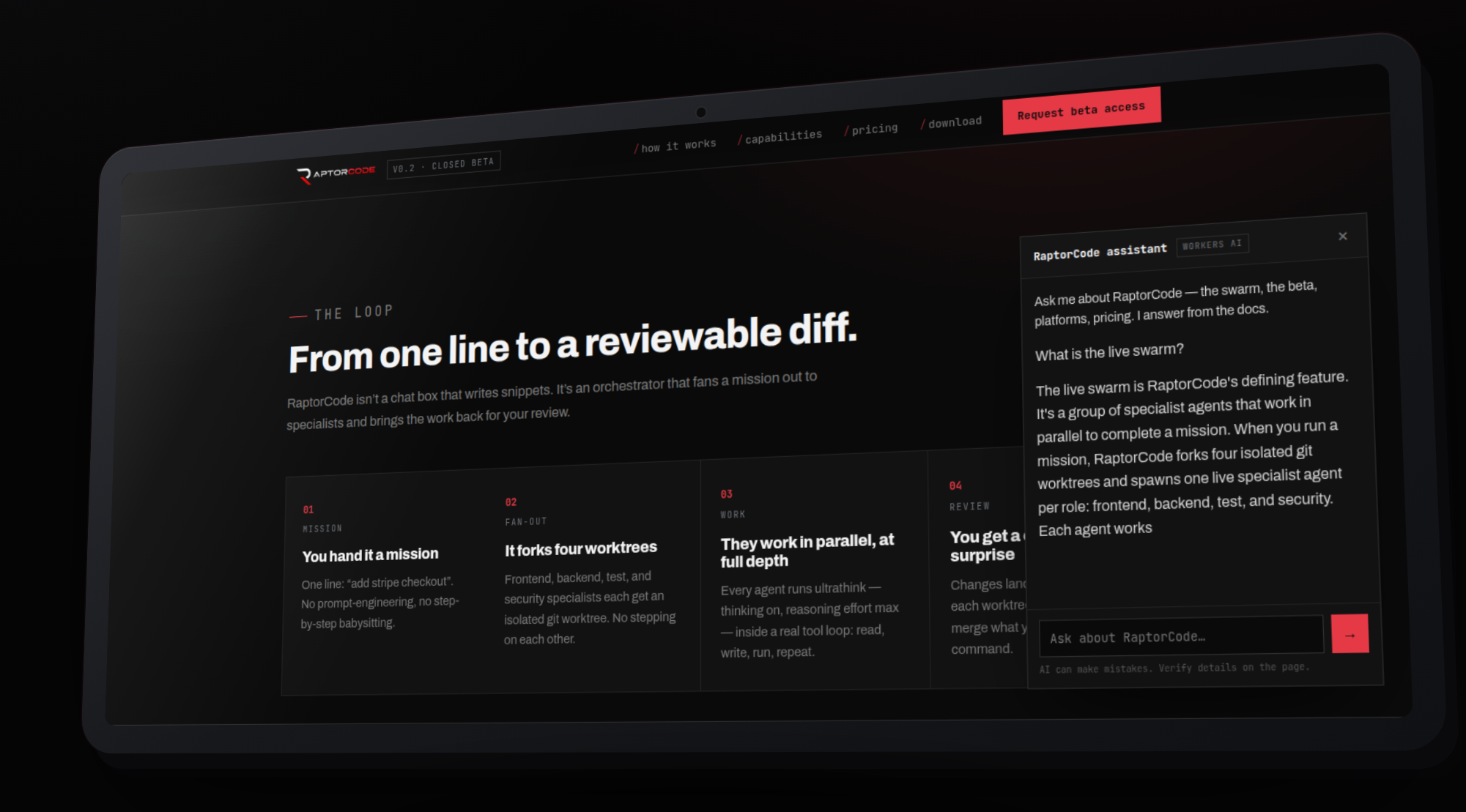
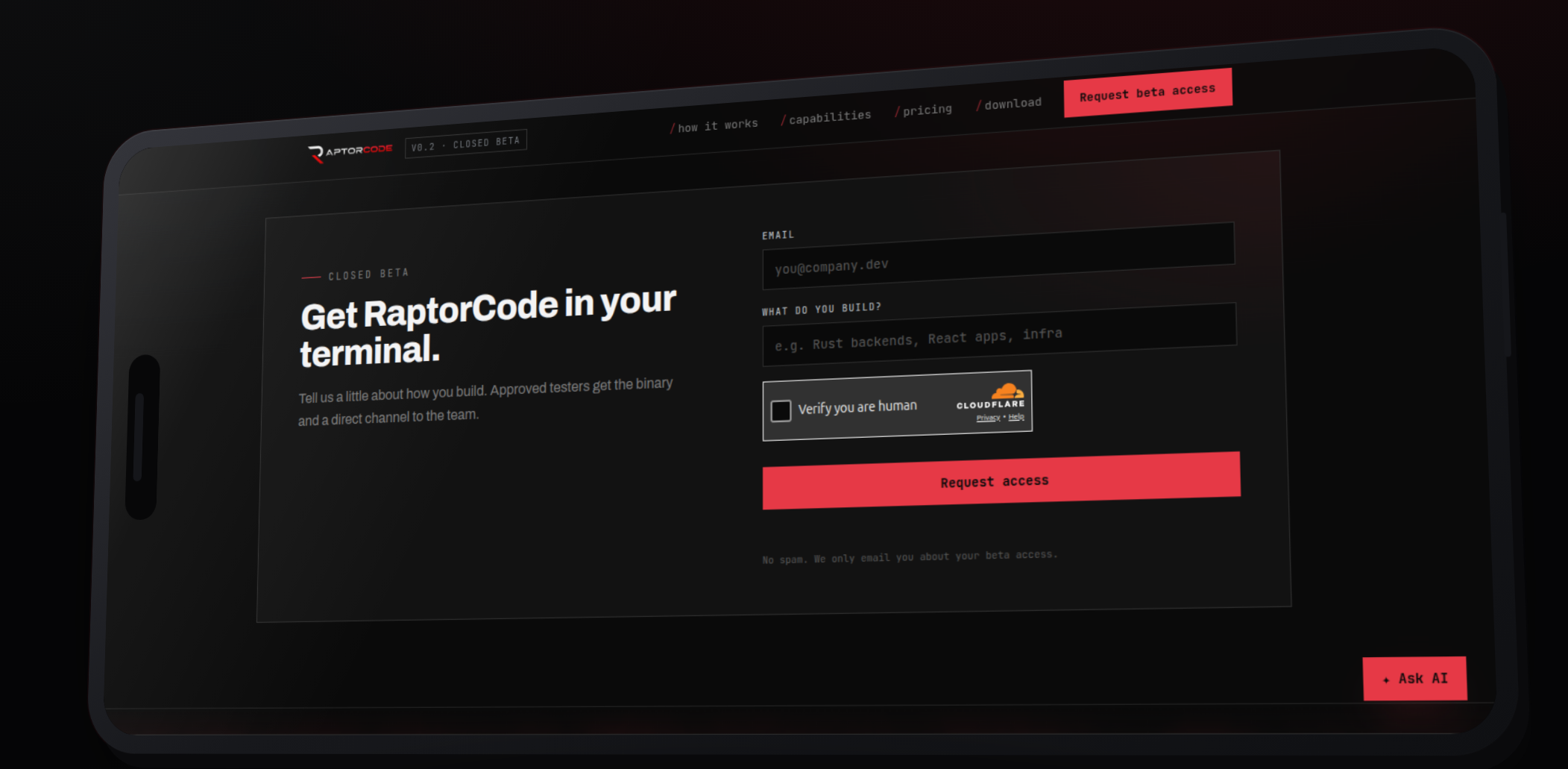
RaptorCode, on every screen
From the live agentic terminal to the launch site — the same mission, every surface.
Why it matters
- A whole team, in one terminal. Four specialists attack different facets of the same mission simultaneously — the work that would queue on a single agent happens at once.
- Isolation by default. Worktree-scoped tool policies mean parallel work never collides and a hard deny-list keeps catastrophic commands out of reach.
- You are the merge gate. Zero commits without your review. The agents propose; you dispose.
- Depth over speed-by-default. Ultrathink and effort=max are the starting point — dial them down per session when you want velocity over rigor.
RaptorCode is available now on Linux, with macOS and Windows in invite-only early access — free during early access in exchange for real-world feedback.